



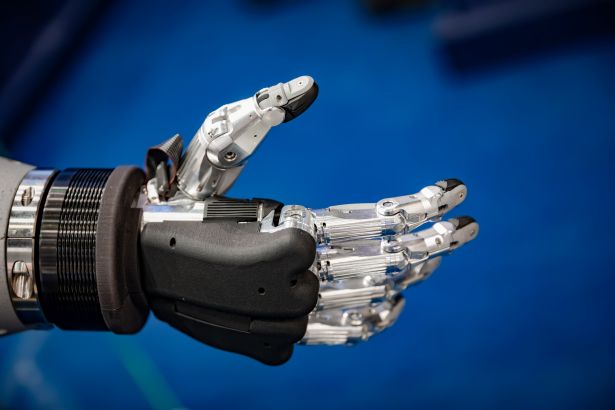
The Value of Compact MEMS 6-Axis Force/Torque Sensors in Humanoid Fingertips
As humanoid robotics and multi-fingered robotic hands evolve, effective fingertip sensing requires far more than basic contact detection. Next-generation systems must understand touch dynamically and in real time—evaluating force magnitude, direction, micro-slips, and whether grip strength is optimal for safe handling.
Multi-taxel tactile sensors excel at mapping contact location, surface area, and pressure distribution. Single-axis tactile sensors offer thin profiles and cost-effective coverage, providing valuable continuous inputs for AI models to recognize touch patterns. However, crucial physical vectors like shear forces and moments cannot be directly measured by single-axis sensing alone. Critical operational tasks—such as early slip detection, friction estimation, grasp evaluation, and controlled manipulation—must instead be indirectly inferred from temporal changes in pressure maps. While feasible, relying solely on estimated force data requires calibration across varying sensor geometries, contact conditions, and material properties [1].
Multi-axis, multi-taxel tactile sensors address some of these limits by capturing localized shear and slip conditions. For example, vision-based tactile sensors use surface deformation to estimate geometry, shear, and contact force [2][3]. Yet, these multi-axis arrays introduce significant architectural complexity. The added wiring, dedicated readout circuitry, data overhead, temperature sensitivity, and wear management create substantial design hurdles—especially when integrating both real-time control and AI inputs within the strict dimensional constraints of a humanoid fingertip.
Complementing Multi-Taxel Tactile Sensing in Physical AI
This is precisely where six-axis force/torque sensors deliver unique value. Although it cannot detect detailed contact distribution, by capturing three-axis forces and three-axis moments across the entire fingertip, a six-axis sensor provides clean, low-dimensional physical data tailored for robotic control. Key functions—including grip modulation, contact point estimation, slip prevention, impedance control, and in-hand manipulation—benefit from these concise, highly reliable physical metrics. In other words, it enables AI models to obtain compressed contact features with clear physical meaning. The concept of estimating contact points and contact states from six-axis force/torque measurements and known fingertip geometry has long been discussed as intrinsic contact sensing [4][5].
Recent research confirms that fingertip six-axis force/torque sensing helps multi-fingered hands accurately estimate contact points and normals without visual feedback [6]. This capability limits excessive contact forces during teleoperation and maintains smooth sliding or pivoting motions—offering a critical secondary layer of feedback when visual line-of-sight is blocked by fingers or target objects.
Historically, conventional six-axis force/torque sensors were costly, bulky, and reliant on external amplifiers or complex signal-conditioning electronics. These physical barriers limited their adoption in robotic hand applications. The compact, MEMS-based MMS101 six-axis force/torque sensor directly overcomes these challenges. Outputting fully compensated six-axis digital data over a standard SPI interface, the MMS101 integrates onboard processing and communication into a compact 9.6 mm diameter by 9 mm height footprint. System integration requires minimal peripheral support beyond power, communication lines, and basic mechanical mounting.
Thanks to its compact form factor, the MMS101 can be integrated across every digit or positioned strategically at primary contact points. This gives engineering teams the flexibility to capture key force-control metrics without compromising mechanical design. Furthermore, built with a robust metal strain structure rather than elastomer-based elements, the sensor minimizes creep and hysteresis to ensure reliable, long-term performance.
From a Physical AI standpoint, six-axis force/torque data is highly streamlined. A fully-equipped five-finger hand with sensors on all 5 fingers generates just 30 dimensions of input data (60 dimensions for a pair)—a fraction of the data produced by high-resolution visual tactile arrays. Because these data points correspond directly to real-world physical properties like shear and normal force and moment, they easily integrate into reinforcement learning models, imitation learning workflows, and real-time safety monitor loops.
Ultimately, six-axis force/torque sensors and multi-taxel tactile sensors perform complementary roles. Tactile arrays map surface contact details, while six-axis sensors deliver the precision data needed to manage force control. Combining an internal six-axis sensor like the MMS101 with a thin tactile skin on the exterior yields an ideal architecture: robust force-control inputs paired with rich AI-driven surface recognition.
By delivering calibrated digital outputs in a MEMS-based architecture, the MMS101 offers a practical, scalable alternative to bulky legacy measurement equipment. It combines high performance with the miniaturization and cost efficiency required for commercial production. As physical AI advances, integrated solution components like the MMS101 will play a fundamental role in shaping the future of multi-fingered robotics and humanoid platforms.
References
[1] B. Sundaralingam, A. Lambert, A. Handa, B. Boots, T. Hermans, S. Birchfield, N. Ratliff, and D. Fox, “Robust Learning of Tactile Force Estimation through Robot Interaction,” IEEE International Conference on Robotics and Automation, 2019.
[2] W. Yuan, S. Dong, and E. H. Adelson, “GelSight: High-Resolution Robot Tactile Sensors for Estimating Geometry and Force,” Sensors, 2017.
[3] W. Yuan, R. Li, M. A. Srinivasan, and E. H. Adelson, “Measurement of Shear and Slip with a GelSight Tactile Sensor,” IEEE International Conference on Robotics and Automation, 2015.
[4] A. Bicchi, “Intrinsic Contact Sensing for Soft Fingers,” IEEE International Conference on Robotics and Automation, 1990.
[5] A. Bicchi, “Contact Sensing from Force Measurements,” The International Journal of Robotics Research, 1993.
[6] Y. Kitahara and M. Bhadu, “Relative Geometrical Constraint on Finger Motion for Dexterous Teleoperation of Multifingered Hand,” IEEE/SICE International Symposium on System Integration, 2026.
 Ohlan Silpachai